
SkeeBoost: Ball Arcade Game
Liberty PixelCasual
4.63.01K Reviews
- Version
- 1.9.7
- Installs
- 500.00K
- Age Rating
- Everyone
Screenshots


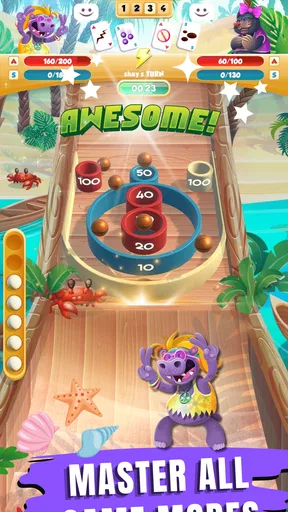


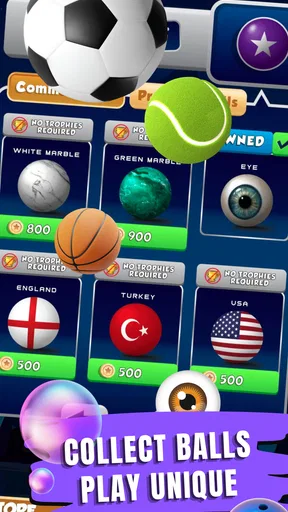


Our Review of SkeeBoost: Ball Arcade Game
 Analysis by Appyee
I picked up SkeeBoost: Ball Arcade Game expecting a quick arcade distraction, and that is exactly where it makes its strongest first impression. It is a casual game from Liberty Pixel built around the familiar feel of skee-ball: roll, adjust your aim, and try to send the ball into a valuable scoring area. The difference is that this version presents the idea as a competitive arcade experience, so each throw feels less like a quiet solo pastime and more like a short test of timing and control.
That simplicity is useful. I did not need a long tutorial or a complicated set of rules before playing. The basic appeal is immediately understandable, which makes it easy to recommend when you want something light between other tasks. At the same time, the game is not automatically a permanent fixture on every phone. Its lasting value depends on whether you enjoy refining small improvements, competing in repeated rounds, and returning to a familiar control loop after the initial novelty has passed.
How the first week feels
During the first few sessions, the game has a pleasant pick-up-and-play rhythm. I could open it, make a few attempts, and stop without feeling that I had abandoned a long campaign. That makes it a good companion for short breaks, especially when I want interaction rather than passive scrolling. The skee-ball format also gives every turn a clear purpose: line up the shot, commit to the roll, and see whether the result matches the intention.
The arcade presentation does much of the work. A traditional skee-ball machine is enjoyable because the rules are visible and the goal is obvious, and this game benefits from carrying that clarity into a mobile format. I never had to spend the opening sessions learning a large collection of systems before understanding what mattered. The central question remains simple: can I aim more consistently than I did on the previous attempt?
That question creates a satisfying early loop. A missed shot is easy to understand, even when the result is disappointing. I can usually blame a poor line, an overconfident attempt, or a lack of attention rather than wondering which hidden menu or character statistic caused the failure. For casual players, that transparency is one of the game’s best qualities.
The competitive framing adds urgency without turning the experience into a heavy strategy game. I found myself taking an extra round because one weak throw made the previous attempt feel unfinished. This is a useful distinction from many simple arcade apps: the goal is not merely to pass time, but to produce a cleaner result than before. The most rewarding progress comes from better judgment, not from learning a complicated rulebook.
Still, the first-week appeal has a limit. The basic action is intentionally narrow, so players who need constant novelty may begin to feel that they have seen the whole idea fairly quickly. There is no point pretending that a skee-ball-style game offers the same breadth as a large role-playing game, a racing title with extensive content, or a puzzle game that continually introduces new mechanics. Its charm comes from repetition with a purpose.
I would especially suggest trying it if you like arcade cabinets, score chasing, or games that can be understood in seconds. It also suits people who dislike games that demand a long uninterrupted session. A quick round can feel complete on its own, while a longer session gives room to chase more accurate play. That flexibility is more important than it sounds because it determines whether the game fits naturally into a daily routine.
For a realistic everyday example, I can imagine opening it while waiting for a coffee, during a short commute break, or after finishing a small household task. I would not choose it for a long evening when I want a deep world to explore, but I would choose it when my attention is limited and I still want a little control and competition. That is where the game feels most comfortable.
What makes the controls worth practicing
The useful skill is not simply tapping quickly. The better approach is to slow down enough to judge each throw. I found that treating every attempt as a small experiment works better than rushing through a sequence. If a shot falls short, I can change one part of my approach rather than making several random adjustments at once. That habit turns the game from a disposable toy into a modest accuracy challenge.
One practical tip is to establish a repeatable aiming routine. I look at the target area, decide how aggressive the attempt should be, and then make the roll without second-guessing it halfway through. This does not guarantee a high score, but it reduces the feeling that a result was completely accidental. It also makes improvement easier to notice because I am comparing similar decisions rather than unrelated guesses.
Another useful trade-off is risk versus consistency. Going for the most ambitious scoring opportunity can create a memorable round, but a safer choice may be better when the competitive result depends on avoiding weak throws. I would not use the same approach in every session. When I am learning, I prefer controlled attempts. When I am chasing a personal best, I am more willing to accept a miss in exchange for a stronger possible result.
Whether it keeps its place after the novelty
The important long-term question is not whether the opening sessions are enjoyable. They are. The question is whether the central loop has enough depth to support repeated visits. In my experience, the answer is yes for a particular kind of player: someone who enjoys incremental mastery and does not need a constant stream of new content to stay interested.
The game’s month-to-month value comes from the small gap between an ordinary attempt and a genuinely satisfying one. A player who can feel the difference between a careless roll and a well-judged roll has a reason to return. The improvement is personal and immediate. I do not need a large collection of unlocks or a complicated progression screen to understand that I played better than before.
That value is less convincing for players who measure longevity by variety. If I want new environments, changing objectives, story developments, or a broad selection of play styles, this is not the right category of experience. The game can remain useful as a short arcade break, but it is unlikely to replace a larger main game for someone who wants a constantly evolving hobby.
The competitive angle helps extend the life of each session because it gives ordinary attempts a little more pressure. Even so, competition does not remove the underlying repetition. After the first excitement, I need to enjoy the act of aiming itself. If I only care about discovering new mechanics, the game’s appeal will probably fade sooner.
I also think the game works best when used in moderation. A few focused rounds leave me wanting another try later. A long uninterrupted session can expose the limited scope more clearly, particularly if my performance stops changing. This is not a criticism of the basic concept; it is a reminder that the title is designed around compact arcade satisfaction rather than marathon entertainment.
The free price makes experimentation easy. I can try the game without committing money at the start, which is helpful for anyone unsure whether a repetitive arcade loop will suit them. There are in-app purchases ranging from $0.99 to $99.99 per item, so I would advise setting a personal spending boundary before treating optional purchases as part of the routine. The sensible way to evaluate the game is to first decide whether the free experience already gives me enough enjoyment.
That spending question matters more in a game with a focused core loop. If the basic rolling and aiming is not enjoyable on its own, purchasing extras will not solve the underlying issue. Conversely, players who already like the format can decide calmly whether any optional item adds enough value to justify the cost. I prefer that approach to buying impulsively after a frustrating round.
Who will keep playing it
I see the strongest fit among casual arcade fans, people who enjoy score improvement, and players who want a game that can be understood without a large time investment. It is also suitable for families looking for an Everyone-rated game with an approachable premise. The age rating makes it easier to consider for a broad audience, although individual preferences about competitive play and optional spending still matter.
It is less suitable for someone who wants a substantial single-player journey, a large strategic system, or a game that rewards long planning sessions. I would also hesitate to recommend it to a player who quickly loses interest when the main action repeats. In that case, a puzzle game with changing rules or a more content-heavy arcade title would probably offer better long-term value.
The game has already found a sizeable audience, with over 500 thousand installs, and its average rating is 4.6 from around 10 thousand ratings. Those figures suggest that the straightforward arcade idea connects with many players, but they should not replace personal testing. A strong average does not change the fact that enjoyment here depends heavily on tolerance for repetition and interest in accuracy.
Maintenance, friction, and reasons fatigue can appear
One advantage of a focused casual game is that it does not demand much mental maintenance. I do not have to remember a long story, maintain a complicated build, or return daily just to keep up with a large community. If I leave it for a while, I can come back and understand the basic action immediately. That makes it easier to keep installed as an occasional option rather than as a daily obligation.
On the other hand, the same simplicity can create its own maintenance problem: I need a reason to return. In a more expansive game, new areas or changing objectives can pull me back automatically. Here, the motivation has to come from the satisfaction of playing better, enjoying the competitive format, or wanting a quick arcade session. If none of those motives is strong, the icon may remain unused even though the game is easy to resume.
A second source of friction is the possibility of performance fatigue. Repeating a similar action can be relaxing when I am focused, but monotonous when I am distracted. I sometimes notice that my later attempts become less thoughtful, and at that point more rounds do not necessarily mean more enjoyment. The best response is to stop rather than force a longer session and blame the game for a problem caused by overplaying.
Competitive play can also produce a particular kind of frustration. A close miss feels motivating when I understand what I could improve, but it feels tiring when several attempts seem to blur together. I recommend taking a brief pause after a poor run and returning with a specific goal, such as improving consistency rather than immediately chasing the highest possible result. That small change keeps the game from turning into an endless reaction to disappointment.
Version 1.9.7 is the current version, and the game supports devices running Android 7.1 or later. That broad compatibility is helpful for people using older Android hardware, though the practical experience will still depend on the phone’s general responsiveness and screen comfort. I would check that the game feels smooth and readable on my own device before deciding whether it deserves a permanent place in regular rotation.
There is also a difference between keeping an app installed and keeping it in a habit. Installation is easy because the game is free, but habit requires a clear use case. For me, the strongest routine would be a few rounds during short breaks, not a promise to play every day. That keeps the arcade quality intact and reduces the chance that repetition turns into a chore.
How it compares with familiar alternatives
Compared with a physical skee-ball machine, the mobile version is more convenient and private. I do not need to visit an arcade, find an available lane, or commit to a public setting. The trade-off is that a phone cannot fully recreate the physical sensation of rolling a real ball and watching it travel through a machine. Players seeking that tactile experience may prefer the real-world alternative whenever one is available.
Compared with endless runners, this game asks for more deliberate control and less constant movement. An endless runner is often better when I want a stream of changing obstacles and rapid reactions. SkeeBoost is better when I want to concentrate on a repeated action and judge the quality of each attempt. Neither is universally superior; they serve different moods.
Compared with traditional score-based puzzle games, this title has a more immediate physical metaphor. I can understand what a successful attempt should feel like without studying combinations or planning several moves ahead. Puzzle alternatives may provide more variety and deeper problem-solving, while this game offers faster entry and a clearer arcade identity.
That comparison explains the game’s long-term position for me. It is not trying to be a complete entertainment ecosystem. It is a compact competitive activity that earns its space when I want a quick, understandable challenge. If I expect it to supply endless variety, I will probably be disappointed. If I judge it as a pocket arcade lane, its limitations feel more reasonable.
My long-term verdict
After the first-week novelty fades, SkeeBoost: Ball Arcade Game remains worthwhile for players who enjoy the quiet satisfaction of improving aim and making repeated attempts with more control. Its casual format, free entry, broad age rating, and simple premise make it easy to try. Liberty Pixel has chosen a focused idea rather than an overloaded one, and that focus is both the game’s main strength and its clearest limitation.
I would keep it installed if I wanted a short competitive game for waiting rooms, breaks, or occasional score chasing. I would not make it my only mobile game, because the central action can become familiar and the experience does not offer the breadth of a larger genre alternative. The best habit is to play in compact sessions, use each round to test one adjustment, and stop while the challenge still feels enjoyable.
My final recommendation is therefore selective but positive. Try it if the idea of a digital skee-ball lane sounds appealing and you like improving through repetition. Skip it if you need constant new mechanics, an unfolding story, or a deep progression system. For the right player, the lasting value is the clean feeling of turning a casual throw into a more deliberate, repeatable skill. That is enough to earn a place on my phone, provided I treat it as a focused arcade break rather than expecting it to become a full-time game.
Verdict
Strengths of SkeeBoost: Ball Arcade Game
- Simple controls make it easy to start playing immediately.
- Short rounds are ideal for quick breaks or casual sessions.
- Arcade-style scoring encourages replaying to beat personal records.
- Bright visuals give the game a cheerful, family-friendly feel.
- Suitable for players who prefer relaxed, skill-based gameplay.
Limitations of SkeeBoost: Ball Arcade Game
- Gameplay may feel repetitive after extended play sessions.
- Precision aiming can be difficult on smaller phone screens.
- Progress may depend heavily on repeated practice.
- Some players may find the pace too slow for an arcade game.
- Performance can vary between older and newer devices.
Similar Picks in This Category
View All
My Talking Angela
Outfit7 Limited4.2

My Talking Tom
Outfit7 Limited4.3

Pou
Zakeh4.2

My Talking Tom 2: Pet Game
Outfit7 Limited4.3

Candy Crush Saga
King4.6

Bridge Race
Supersonic Studios LTD4.1
Frequently Asked Questions
What is SkeeBoost: Ball Arcade Game?
SkeeBoost: Ball Arcade Game is a casual arcade title built around the classic skee-ball concept. You launch or roll balls toward scoring targets, aiming to land them in the highest-value holes while trying to complete objectives and improve your results. The game is easy to understand, making it suitable for short sessions, although later stages may require more accurate timing and careful control.
How do you play SkeeBoost: Ball Arcade Game?
The main gameplay is based on controlling the direction and power of each ball before sending it up the ramp. Your goal is to reach valuable scoring rings or targets and achieve the required score for the level. Successful shots can help you progress, while inaccurate launches may waste limited attempts or reduce your final result. The controls are generally simple, but consistent precision becomes more important as challenges increase.
Is SkeeBoost: Ball Arcade Game free to download and play?
SkeeBoost: Ball Arcade Game can generally be downloaded without an upfront purchase, allowing players to try the core experience at no initial cost. However, availability of advertisements, optional purchases, extra rewards, or other monetization features may depend on the version and platform. Before downloading, it is worth checking the current Google Play or App Store listing for pricing, in-app purchase details, and any device-specific restrictions.
Does SkeeBoost: Ball Arcade Game require an internet connection?
The basic arcade gameplay may work without a continuous internet connection, which makes the game convenient for quick entertainment while traveling or when mobile data is unavailable. Nevertheless, certain functions—such as advertisements, cloud-related features, event content, leaderboards, or purchase verification—could require connectivity. Players should also remember that offline availability can change after updates, so checking the latest store information is recommended.
Is SkeeBoost: Ball Arcade Game suitable for children and casual players?
The straightforward controls and familiar ball-tossing gameplay make SkeeBoost: Ball Arcade Game accessible to casual players and beginners. It does not require extensive gaming experience, and individual rounds can usually be completed in a short time. Parents should still review the app’s age rating, advertising behavior, privacy information, and possible in-app purchases before allowing children to play, since these details may vary between Android and iOS versions.
Play our best games!


